
Facebook advertising gives registered massage therapists something remarkably powerful: the ability to put a specific message in front of a specific type of person in a specific geographic area, for a modest daily budget. For clinics looking to grow their client base beyond word-of-mouth referrals, it is one of the most cost-effective paid channels available. But running ads without a clear strategy produces mediocre results at best and wastes money at worst. This guide covers what actually works for RMTs advertising on Facebook in Canada.
Why Facebook Advertising Works for RMTs
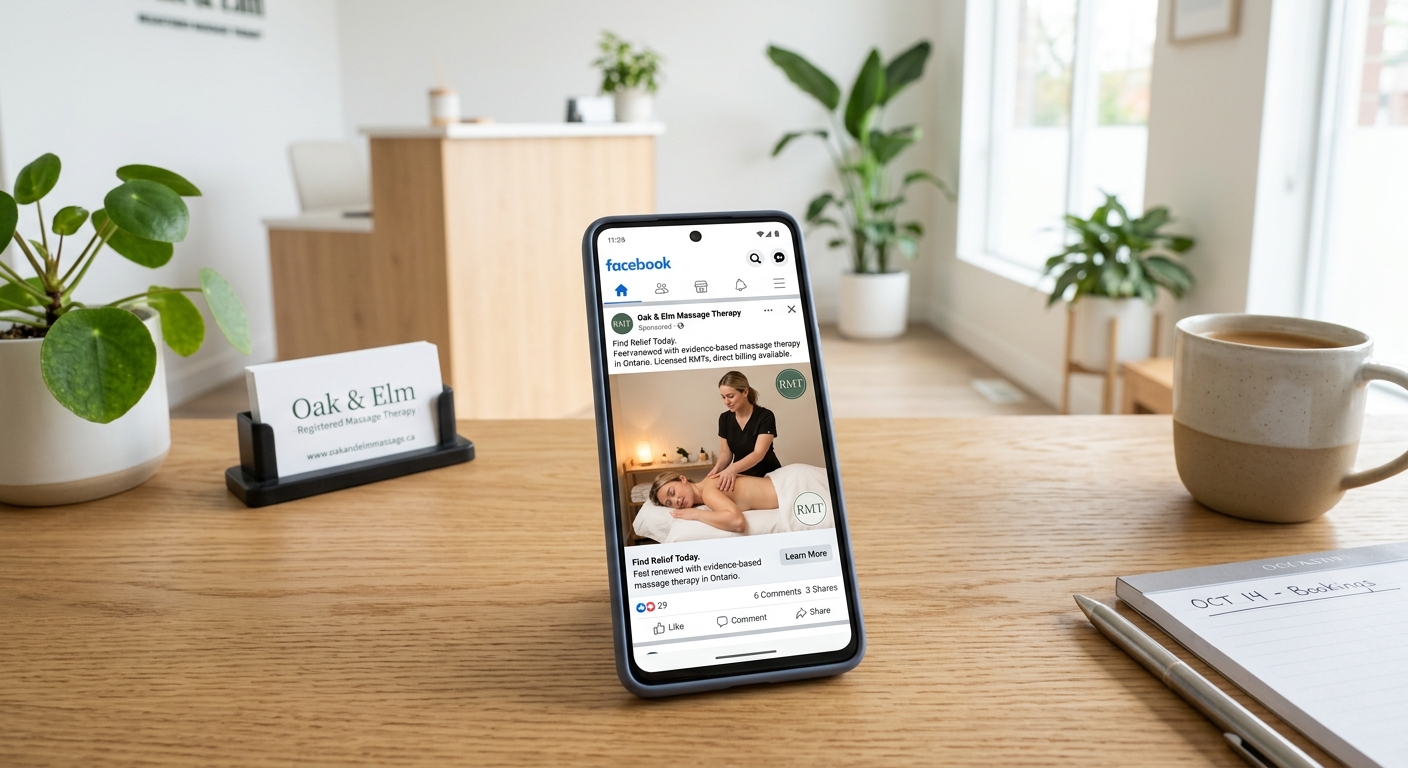
Facebook’s targeting capabilities are well-suited to local health and wellness businesses. You can define your audience by postal code radius, age range, household income, life stage, and a wide range of interest signals. For an RMT whose ideal client is a 35 to 55-year-old professional in a specific neighbourhood dealing with chronic desk-related tension, that level of specificity is genuinely useful.
The platform also allows you to build on your existing client base through lookalike audiences, which find new users whose demographics and behaviour resemble your best existing clients. Combined with retargeting, which shows ads to people who have already visited your website, Facebook gives smaller practices access to marketing infrastructure that was previously only available to much larger businesses.
According to Meta’s Canadian advertising resources, health and wellness businesses consistently see strong local conversion rates when campaigns are structured around clear geographic targeting and specific service offers rather than broad brand awareness.

Facebook advertising allows RMTs to reach specific local audiences with targeted offers at a manageable budget
Setting Up Your First Campaign
Before you create a single ad, get clear on two things: who you are trying to reach, and what you want them to do. These decisions shape every element of your campaign, from the creative to the copy to the call to action. Campaigns that skip this step tend to target too broadly, use vague messaging, and measure the wrong outcomes.
Start with a campaign objective that matches your actual business goal. If you want people to book appointments, use the Leads or Conversions objective rather than Reach or Awareness. If you want to grow your local following before running direct-response campaigns, Engagement campaigns are appropriate. Mismatched objectives are one of the most common reasons small business Facebook campaigns underperform.
Targeting for Canadian RMT Clinics
For most Canadian massage therapy clinics, geographic targeting is the single most important targeting variable. Set your radius based on your actual client travel patterns. Many urban clients will travel 5 to 10 km for a trusted practitioner; suburban clients may travel further. Start conservatively and expand if you are not reaching enough people within your minimum budget threshold.
Layer demographic and interest targeting on top of your geographic base. Age ranges of 28 to 60 typically capture the highest-converting demographic for massage therapy. Interest signals like fitness and wellness, yoga, physiotherapy, and workplace ergonomics help refine your audience toward people who are already engaged with their physical health and more likely to value professional massage therapy.
For RMTs who accept extended health benefit coverage, this is worth highlighting in your ad copy. A significant proportion of Canadian employees have massage therapy benefits they are not using, and a direct message about benefits coverage regularly improves campaign conversion rates in the Canadian market.
Ad Creative That Converts
The most effective Facebook ads for RMT clinics are specific, credible, and visually professional. Vague ads like “Book a massage today!” consistently underperform compared to ads that speak to a specific client problem: “Desk-related neck and shoulder tension? Our registered massage therapists specialise in releasing the patterns created by long hours at a computer.”
Use real photos of your clinic and team wherever possible. Stock photography performs noticeably worse than authentic images because prospective clients are evaluating whether they want to trust someone with their body. A clean, professional photo of your actual treatment space or therapist is more convincing than a generic wellness image.
Video ads, even short 15 to 30 second clips showing your clinic environment or a brief explanation of what to expect from a first appointment, consistently outperform static images in terms of engagement and conversion. You do not need production-quality video. A well-lit, clearly spoken clip shot on a smartphone performs well if the content is genuinely useful. For broader ideas on how to integrate Facebook advertising into your overall digital presence, our guide on RMT social media mastery covers the organic foundation that makes paid advertising more effective.
Budget and Bidding
For a new Facebook campaign, a daily budget of $10 to $20 is sufficient to generate meaningful data within two to four weeks. Resist the temptation to scale too quickly. Let campaigns run for at least three weeks before making significant changes, as Facebook’s algorithm needs time to learn which users within your target audience are most likely to convert.
Monitor cost per lead or cost per booking rather than cost per click. A higher cost-per-click ad that produces bookings at an acceptable cost is more valuable than a cheap click that never converts. Track your results through Meta Ads Manager alongside Google Analytics for your physiotherapy or RMT website to get a complete picture of the client acquisition journey.
Compliance for Health Professionals in Canada
RMTs advertising in Canada must ensure their ads comply with provincial regulatory guidelines on advertising and promotion. In Ontario, for example, the CMTO has specific provisions about claims, testimonials, and the use of professional designations in advertising. Before running any campaign, review your provincial college’s advertising standards to ensure your copy and creative meet the requirements. Non-compliant advertising can result in regulatory complaints regardless of its effectiveness as a marketing tool.
Frequently Asked Questions
How Much Should an RMT Spend on Facebook Ads?
A reasonable starting budget for a solo RMT or small clinic is $300 to $600 per month. This provides enough data to assess campaign performance and make informed optimisation decisions. Scale up once you have identified what is converting, not before. Many practitioners overspend in the early testing phase before they know what works.
How Long Before I See Results?
Expect a minimum of three to four weeks before drawing conclusions from a new campaign. The first week is largely the algorithm’s learning phase. By week three to four you will have enough data to make informed decisions about creative, targeting, and budget allocation.
Can I Use Client Testimonials in Facebook Ads?
Yes, with explicit written consent and subject to your provincial regulatory college’s advertising guidelines. In some provinces, testimonial advertising by regulated health professionals is restricted or requires specific disclosures. Check with your college before using patient testimonials in any paid advertising.
What Is a Lookalike Audience and Should I Use One?
A lookalike audience is a targeting option that finds Facebook users who share demographic and behavioural characteristics with your existing clients or website visitors. It is one of the most effective targeting tools for local health businesses once you have a sufficient source audience. You typically need at least 100 to 500 source users for a meaningful lookalike. Start with geographic and interest targeting first, then layer in lookalikes once your pixel has collected enough conversion data.
Should I Run Ads to My Website or Use Facebook’s Lead Forms?
Lead forms keep users within Facebook, which reduces friction and typically produces lower cost-per-lead. However, leads from native forms tend to be lower intent and may not convert to bookings at the same rate as people who visited your website. Test both formats and compare cost-per-booking rather than cost-per-lead to determine which performs better for your specific clinic.
How Do I Track Whether My Facebook Ads Are Leading to Bookings?
Install the Meta Pixel on your website and set up a conversion event that fires when someone completes a booking or submits an enquiry form. This allows Facebook to optimise for actual bookings rather than just clicks and gives you accurate data on your cost per acquisition. If you use an online booking platform, check whether it supports Meta Pixel integration or allows UTM parameter tracking for attribution.