
In the competitive field of massage therapy, a unique value proposition (UVP) is essential for Registered Massage Therapists (RMTs) to differentiate their practice and attract clients. This guide outlines how to develop a compelling UVP that resonates with your target market and highlights your distinctive offerings.
Understanding the Value Proposition Concept

A value proposition is a clear statement explaining how your RMT services solve client problems, deliver specific benefits, and why clients should choose you over other therapists. It forms the cornerstone of your marketing strategy and should be integrated into all your communications.
As Harvard Business Review defines it, “A value proposition is not just about what you offer; it’s about the value your offering creates for the customer.” For RMTs, this means articulating how your specific skills and approach translate into tangible benefits for clients.

Visual context for the article: Crafting Unique Value Propositions for RMTs
Defining Your Target Market
Understanding your ideal clients is critical for creating an effective UVP. Consider the following steps:
- Conduct market research to identify your target audience’s demographic and psychographic characteristics.
- Develop detailed client personas to represent different segments of your market.
- Analyze client behaviour patterns and preferences related to massage therapy.
Effective market segmentation enables RMTs to tailor their messaging and services to specific groups, increasing the relevance and appeal of their value proposition. For further insights on how to build a strong online presence for your practice, consider reading our post on Website Essentials for RMT Success.
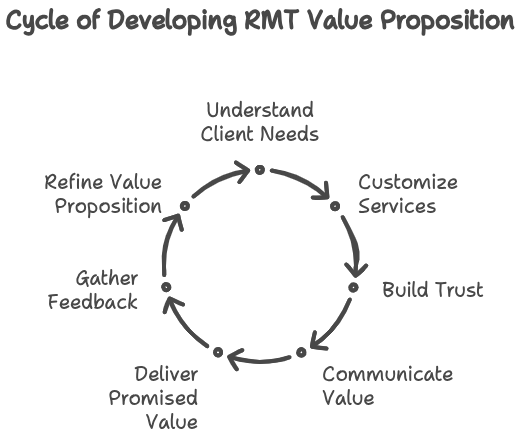
Identifying Key Client Needs

To develop a strong UVP, RMTs must understand their clients’ primary needs and desires, not just what services are offered.
Here’s a breakdown of common client needs and how RMTs can address them:
| What Clients Need | How RMTs Can Help |
|---|---|
| Relief from muscle tension | Customized massage techniques |
| Stress reduction | Individualized care and a calming environment |
| Pain management | Efficient, results-oriented treatment plans |
| Improved mobility | Targeted therapeutic treatments |
| Trust and open communication | Building a strong therapeutic rapport |
A robust UVP functions beyond marketing; it represents a commitment to deliver value based on a thorough understanding of client needs. Pinpointing these needs ensures your UVP clearly communicates the unique benefits of your massage services. We will explore this further in the next section.
Differentiating Your Massage Services

To stand out in a competitive market, focus on what makes your practice distinctive:
- Specialized techniques: Highlight advanced certifications or unique modalities you offer. For example, specify if you are certified in myofascial release, lymphatic drainage, or craniosacral therapy.
- Client experience: Emphasize your approach to client care, such as personalized treatment plans, a focus on client education, or exceptional amenities that enhance the therapeutic environment.
- Niche expertise: Focus on specific populations (e.g., athletes, prenatal clients, seniors) or conditions (e.g., fibromyalgia, TMJ disorders, post-surgical rehabilitation).
The College of Massage Therapists of Ontario (CMTO) emphasizes the importance of RMTs clearly communicating their scope of practice and professional expertise. RMTs who effectively convey their specialized skills and unique approach are more likely to attract and retain loyal clients. For more on optimizing your online presence, see our post on Boosting Google Rankings for Massage Therapists.
Refining and Testing Your Value Proposition

After developing your initial value proposition, it requires refinement and testing. Tools like A/B testing, user feedback, and data analysis can significantly enhance its effectiveness.
Here’s a three-step process to fine-tune your value proposition:
- Utilize A/B or split testing on various versions of your value proposition. This technique helps pinpoint the most effective messaging based on concrete data.
- Gather client feedback and conduct data analysis to understand your audience better. This process will highlight the specific benefits that resonate most with clients, assisting in message refinement.
- Implement user testing to evaluate how your proposition performs in real-world scenarios. This strategy allows for adjustments based on actual client responses.
Monitor key performance indicators like conversion rates and client engagement. This data-driven approach enhances the efficiency of your value proposition. The goal is to craft a message that highlights your unique offerings and connects deeply with your clients, fostering growth and success for your RMT practice.
Frequently Asked Questions
What Is an Example of a Unique Value Proposition?
Apple’s “Think Different” campaign serves as an excellent example of a unique value proposition. Apple does not just sell devices; they advocate for innovation and individuality. This approach extends beyond their products and strongly resonates with their customer base, transforming how their audience perceives the brand.
What Are the 5 Steps to Create a Unique Value Proposition?
First, conduct thorough market research to understand the landscape. Second, analyze competitors to identify their approaches and pinpoint where your practice can differentiate itself. Third, determine your unique selling points, the specific advantages your RMT practice offers. Fourth, synthesize this information into a persuasive statement that encapsulates your distinct value. Finally, regularly review and revise this statement to ensure it remains relevant with market changes.
How Do You Craft a Value Proposition Statement?
Crafting a value proposition statement involves clearly articulating the problem your RMT service solves, what sets your service apart from others, and the unique benefits it provides. Support these claims with tangible proof. Keep the statement concise and clear to maintain audience engagement. Authenticity is crucial in this process; be genuine, relatable, and craft a value proposition statement that truly resonates with your target clients.
What Is a Unique Value Proposition for a Charity?
A charity’s unique value proposition is its core elevator pitch, defining what makes it distinct. It captures donor and volunteer attention by clearly outlining its mission, how it achieves its objectives, and the positive impact it creates in the community or wider world.
How Does a Strong UVP Benefit an RMT Practice?
A strong Unique Value Proposition benefits an RMT practice by attracting ideal clients who specifically value your unique offerings. It enhances client retention by clearly communicating the specific benefits they receive, making your practice stand out from competitors, and ultimately contributes to increased bookings and sustainable business growth.