Just like a well-conditioned muscle responds better to treatment, a well-built professional network strengthens every aspect of your massage therapy practice. Networking isn’t about working a room or collecting contacts — it’s about building genuine relationships that open doors, generate referrals, and keep you sharp in a constantly evolving field. Whether you run a solo practice or work within a clinic, the people you know are as important as the techniques you master.
Importance of Networking in Massage Therapy

Networking is one of the most underrated tools in a massage therapist’s business toolkit. Done consistently, it generates a steady stream of warm referrals, keeps you informed on industry developments, and positions you as a respected professional rather than just another service provider.
The difference between a fully booked practice and one that constantly chases new clients often comes down to relationships. Therapists who invest time in connecting with chiropractors, physiotherapists, personal trainers, and other wellness professionals create a referral ecosystem that works even when they’re not actively marketing. Those colleagues send clients your way because they trust you — and trust is built through consistent, genuine engagement.
Staying connected also means staying current. Peers share insights on new techniques, treatment approaches, and business strategies that you simply won’t encounter working in isolation. That ongoing learning compounds over time, making you a more effective practitioner and a more credible referral partner.
Traditional Networking Techniques for Therapists
The most effective traditional networking strategies for massage therapists are rooted in providing value rather than seeking it.
- Build relationships with complementary practitioners: Reach out to local chiropractors, physiotherapists, and sports medicine doctors. Introduce yourself, explain your specialties, and make clear how your services complement theirs. These are your best potential referral partners.
- Attend industry conferences and workshops: Events hosted by professional associations are ideal for meeting peers, learning from experienced practitioners, and staying visible in your professional community. The American Massage Therapy Association (AMTA) regularly hosts events specifically designed for networking and professional development.
- Get involved in community events: Health fairs, charity runs, and wellness expos put you directly in front of potential clients in a low-pressure environment where you can demonstrate your expertise naturally.
- Join massage therapy associations: Professional memberships add credibility, provide networking opportunities, and connect you with a broader community of practitioners who can offer support and referrals.
- Nurture existing client relationships: Satisfied clients are your most powerful advocates. A client who feels genuinely cared for will recommend you to friends, family, and colleagues without being asked.
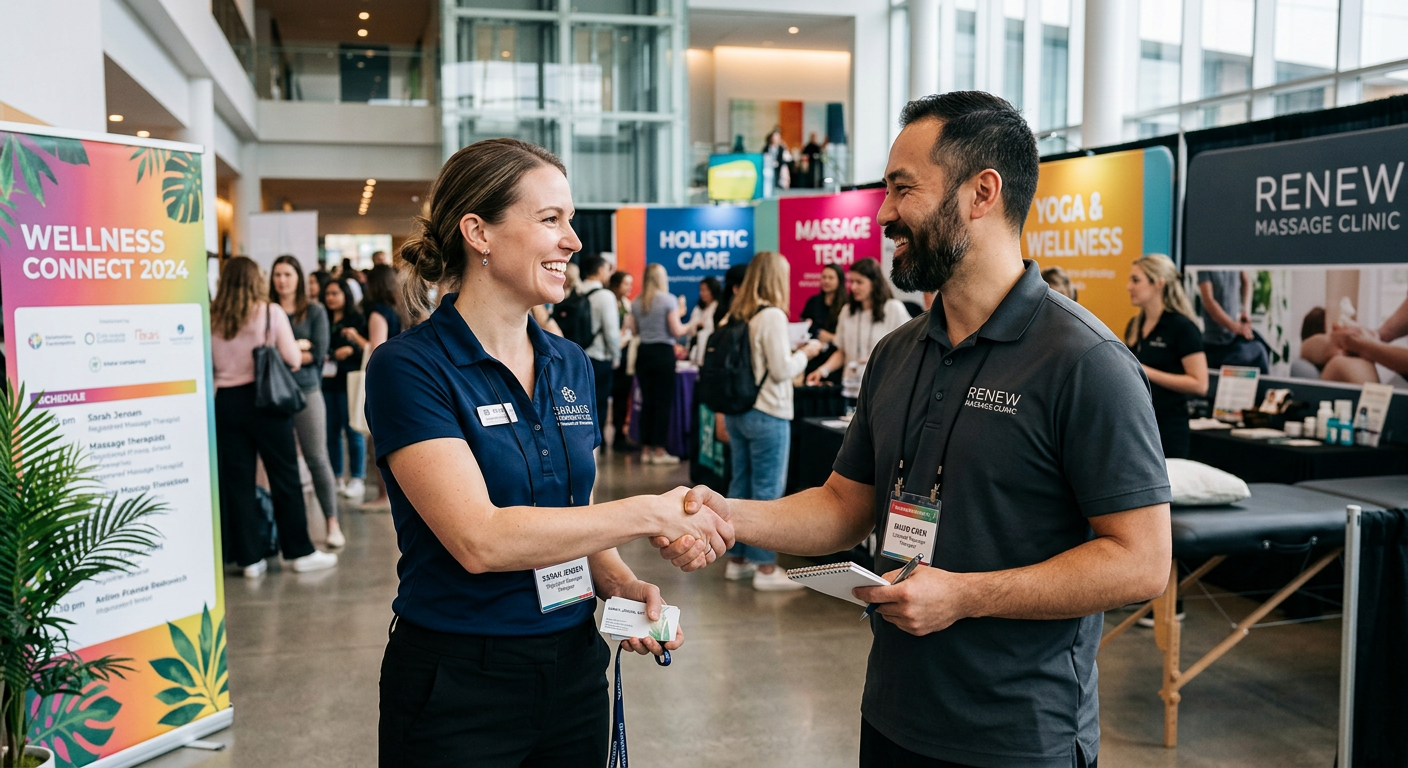
Massage therapists building referral partnerships at an industry networking event
Digital Networking Strategies
Digital tools have made it easier than ever to build and maintain a professional network — but only if you use them with intention. The goal isn’t to be everywhere; it’s to show up consistently in the places where your target audience and referral partners spend their time.
Social media platforms like Instagram and Facebook are effective for reaching potential clients directly, particularly when you share educational content about recovery, pain management, and the benefits of massage therapy.
LinkedIn is where you connect with other healthcare professionals. A well-maintained profile that highlights your credentials, specializations, and approach makes it easier for physicians and physiotherapists to confidently refer clients your way.
Online webinars and virtual conferences open up networking opportunities that weren’t previously accessible to solo practitioners. Email marketing remains one of the most effective ways to stay top-of-mind with existing clients — a short monthly newsletter with seasonal tips or clinic updates keeps relationships warm between appointments.
Building Long-Term Professional Relationships
Strong professional relationships don’t happen by accident — they require consistency, generosity, and follow-through.
- Lead with value: Before asking anything of a professional contact, think about what you can offer them. Share a useful resource, refer a client their way, or invite them to collaborate on a community event.
- Create a referral loop: When you refer clients to other trusted practitioners, you naturally encourage reciprocity. This is the foundation of a sustainable referral network — genuine mutual support, not transactional exchanges.
- Follow up consistently: A relationship that goes quiet fades quickly. Check in with professional contacts periodically, even if there’s no immediate business reason to do so.
- Close the loop on referrals: When a colleague sends you a client, let them know the outcome (within appropriate privacy boundaries). This demonstrates professionalism and reinforces their confidence in referring to you again.
Research from the National Center for Complementary and Integrative Health (NCCIH) continues to validate the clinical benefits of massage therapy for conditions including chronic pain, anxiety, and musculoskeletal issues. Staying informed on this evidence base gives you credible talking points when building relationships with medical professionals who may be skeptical of referring patients to massage therapists.
Case Study: Successful Networking Examples

Real-world results underscore what consistent networking can accomplish for massage therapists at every stage of their career.
One therapist focused her networking efforts on attending industry-specific events and refining her elevator pitch. Within a year, she had formed five strong referral partnerships and seen a 30% increase in client referrals. The key wasn’t volume — it was targeting the right rooms and showing up prepared.
Another therapist shifted her strategy to LinkedIn and online wellness communities, connecting with local physiotherapists and sports coaches. Within months, those digital relationships translated into a consistent flow of referred clients — proving that online networking, when approached professionally, carries the same weight as in-person connections.
A third therapist partnered with a local spa to cross-refer clients, resulting in a 20% increase in new bookings. The arrangement was mutually beneficial: the spa gained a trusted referral for clients needing clinical-level treatment, and the therapist gained exposure to a new client demographic.
Perhaps the most striking example: a therapist who joined a professional online forum for massage therapy received ten new client inquiries in her first month of active participation. By positioning herself as a knowledgeable, helpful resource within the community, she attracted clients organically — without a single paid advertisement.
These outcomes share a common thread: proactive, consistent, and genuine engagement creates opportunities that passive marketing simply cannot replicate. For a deeper look at how to build your presence as an RMT online, our guide covers platform-specific strategies tailored to massage therapists.
Frequently Asked Questions
Why Is Networking Important for Massage Therapists?
Networking directly affects your ability to grow a stable, sustainable practice. Colleagues who trust your work refer clients to you when their own schedules are full. Other healthcare professionals send patients your way when massage therapy is the right clinical fit. And staying connected keeps you current on techniques and industry standards that make you a more effective practitioner. It’s not just about expanding your client list — it’s about building a career with lasting foundations.
How Do I Get More Clients for My Massage Business?
The most reliable path to more clients combines visibility and trust. Use platforms like Instagram and Facebook to showcase your work and share genuinely useful content. Offer a compelling first-visit incentive to lower the barrier for new clients. Partner with complementary local health businesses to access each other’s client bases. Enable online booking to remove friction from the scheduling process. And actively encourage satisfied clients to leave reviews — social proof is one of the most powerful conversion tools available to a small practice.
How Do I Market Myself as a Massage Therapist?
Effective self-marketing for massage therapists starts with clarity on your specialty and target client. A professional website that clearly communicates your approach and credentials is the foundation. Pair that with active social media presence, strategic partnerships with local wellness businesses, and a referral program that rewards your best advocates. Consistent, value-led content — tips on recovery, explanations of techniques, client success stories — builds trust over time and attracts clients who are already pre-sold on your expertise.
How to Make 6 Figures as a Massage Therapist?
Six-figure income as a massage therapist typically comes from a combination of premium pricing, diversified revenue streams, and a high-retention client base. Specializing in a high-demand niche — sports recovery, oncology massage, or prenatal care — allows you to command premium rates. Adding complementary services, retail products, or online educational content creates income that doesn’t depend entirely on your treatment hours. A strong referral network from allied health professionals ensures a consistent pipeline of pre-qualified clients who value your work and are less price-sensitive.
How Can Networking Improve My Client Retention Rates?
Networking has a direct and often overlooked impact on client retention. When clients see you as part of a broader professional community — collaborating with physiotherapists, personal trainers, or other wellness practitioners — they perceive you as more credible and better positioned to support their overall health. That confidence makes them more likely to return. Beyond perception, a strong network means you can refer clients to specialists when issues fall outside your scope of practice. That kind of holistic support builds deep loyalty — clients who feel genuinely looked after don’t need to look elsewhere.