
As a digital media advisor with over seven years of experience working with physiotherapy clinics, I’ve seen firsthand how leveraging advanced Google Analytics can revolutionize their online advertising strategies. This guide shares expertise on using this powerful tool to gain valuable insights, optimize your website, and drive more appointments for your clinic.
Understanding Advanced Google Analytics

Advanced Google Analytics is a robust tool providing extensive information about how users interact with your physiotherapy website. Businesses that use advanced analytics are more likely to make faster, data-driven decisions. According to Google, marketers who effectively use analytics are 2.6 times more likely to report revenue growth.
Key benefits of using advanced Google Analytics include:
- Tracking user behaviour and engagement.
- Identifying traffic sources and referral paths.
- Measuring conversion rates and goal completions.
- Analyzing patient demographics and interests.
By leveraging custom dimensions and metrics, you can better understand how users engage with your site and make informed decisions to optimize your marketing efforts.

Visual context for the article: Using Advanced Google Analytics in Physiotherapy
Setting up Conversion Tracking
Conversion tracking is essential for measuring the success of your physiotherapy clinic’s online advertising campaigns. As marketing expert Neil Patel states, “If you’re not tracking conversions, you’re missing out on critical data that could help you generate more leads and sales.”
To set up conversion tracking in Google Analytics:
- Define your key conversion goals, for example, appointment bookings or contact form submissions.
- Create custom goals in your Google Analytics account.
- Implement tracking codes on your website to record conversions.
- Monitor and analyze conversion data regularly.
By accurately tracking conversions, you can identify which marketing channels and campaigns drive the most valuable actions on your website and allocate your budget accordingly. For more on optimizing your online presence, read our post on Physiotherapy Marketing Strategies.
Utilizing Key Performance Indicators to Measure Success

Once conversion tracking is in place, monitoring Key Performance Indicators (KPIs) is crucial to assessing your physiotherapy campaigns’ health. The Content Marketing Institute notes that “tracking KPIs helps you understand what’s working and what’s not, allowing for data-driven decisions to improve your content marketing strategy.”
Essential KPIs for physiotherapy clinics include:
- Conversion Rate: The percentage of website visitors who complete a desired action.
- Click-Through Rate (CTR): The ratio of users who click on a specific link to the total number of users who view the page or ad.
- Return on Investment (ROI): The profit generated from your advertising campaigns compared to the amount spent.
Regularly monitoring these KPIs in Google Analytics provides valuable insights into your campaigns’ performance, enabling data-driven optimizations to improve results.
Analyzing Patient Behaviour
Understanding how patients interact with your physiotherapy website is vital for providing a seamless user experience and encouraging engagement with your online resources. Google Analytics offers a range of tools to help analyze patient behaviour, such as:
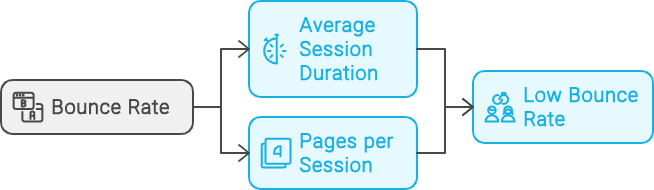
- Bounce Rate: The percentage of visitors who leave your site after viewing only one page.
- Average Session Duration: The average amount of time users spend on your site per visit.
- Pages per Session: The average number of pages viewed by a user during a single session.
Studying these metrics allows you to identify areas of your website that may be causing patients frustration or confusion and make targeted improvements to enhance their experience. For instance, a high bounce rate on certain service pages might indicate a need to revise content or improve calls-to-action. You can find more detail on this in our article about Local SEO for Physiotherapy Clinics.
Optimizing Physiotherapy Websites

With insights from Google Analytics, you can implement data-driven optimizations to improve your physiotherapy website’s performance and drive better results for your clinic. Key strategies include:
- Improving website speed and mobile responsiveness.
- Optimizing content for target keywords and user intent.
- Simplifying navigation and site structure.
- Enhancing calls-to-action (CTAs) to encourage conversions.
- Regularly updating content to keep it fresh and relevant.
As digital marketing expert Ryan Deiss emphasizes, “The key to successful website optimization is to continuously test, measure, and refine based on data.”
Advanced Google Analytics is a powerful tool to help physiotherapy clinics better understand their online performance, patient behaviour, and advertising effectiveness. By setting up conversion tracking, monitoring KPIs, analyzing patient behaviour, and implementing data-driven optimizations, you can create a more engaging and effective online presence that drives real results for your clinic.
Frequently Asked Questions
What Is Advanced Google Analytics?
Advanced Google Analytics is a robust tool providing in-depth insights into user interactions on your website. It goes beyond basic metrics, offering customized tracking capabilities, such as event tracking, to monitor specific user actions. This sophistication allows for precise data collection, enabling you to tailor your online strategies based on verifiable performance indicators.
How Long Does It Take to Get Advanced Google Analytics Certification?
The Advanced Google Analytics certification typically takes around four hours to complete. This swift program provides comprehensive knowledge of the platform’s advanced functionalities, equipping practitioners with the skills to leverage insightful data for website performance analysis.
Is the Google Analytics Course Free?
While the complete Google Analytics course is not free, various resources and introductory materials are often available at no cost. Paid courses frequently offer benefits such as in-depth video lessons, flexible access, and certification upon completion. Some providers also offer a refund policy within a specified period, like 30 days, to ensure satisfaction. Group training options are also available for teams.
When Google Ads Is Linked to Google Analytics, How Can It Leverage Audiences From Google Analytics?
Linking Google Ads with Google Analytics provides a rich source of data for refining ad campaigns. This integration allows advertisers to tap into detailed audience segments identified in Google Analytics. By understanding user demographics, interests, and behaviours on your site, you can create highly targeted ad campaigns within Google Ads. This precision ensures that ads are displayed to individuals most likely to be interested in your physiotherapy services, leading to more relevant engagements, improved ad performance, and ultimately, higher conversion rates.
Does using Advanced Google Analytics comply with Canadian privacy regulations like PIPEDA?
Yes, when configured correctly, Advanced Google Analytics can be used in compliance with Canadian privacy regulations such as the Personal Information Protection and Electronic Documents Act (PIPEDA). Key steps include anonymizing IP addresses, obtaining user consent for cookie usage (often through a prominent consent banner), and ensuring data processing agreements are in place with Google. It’s crucial for clinics to review their specific setup and practices to ensure full compliance with PIPEDA and other applicable provincial privacy legislation (e.g., PHIPA in Ontario for health information).